Modern power tools are no longer defined by power alone but by how effectively they deliver consistent performance, reduce downtime, and integrate into a larger ecosystem of productivity and support.
The Spec Era Is Ending. The System Era Has Begun. Entering 2026
The Shift Beyond Specifications
There was a time when progress in the power tools industry was straightforward to measure, where higher wattage, stronger torque, and faster RPM were considered the ultimate indicators of performance and capability, and for many years these benchmarks guided both product development and buying decisions across the Indian market, creating a highly specification-driven environment where visible output defined value and differentiation between brands, but as the role of power tools expanded across longer work cycles, larger infrastructure projects, and increasingly demanding applications, this definition of performance began to evolve, as professionals started looking beyond initial output and focusing more on how tools behave over extended use, under varying site conditions, and across their full lifecycle, leading to a fundamental shift in evaluation criteria, where reliability, uptime, and long-term efficiency started becoming as important as raw power itself.
Understanding the Professional Tool Stack (PTS)
This transition has led to the emergence of what can be described as the Professional Tool Stack (PTS), a more comprehensive framework that explains how modern tools create value not just at the point of purchase but throughout their operational life, bringing together three interconnected layers—power, intelligence, and infrastructure—which collectively determine how well a tool performs in real-world working environments and how effectively it supports productivity over time, reflecting a deeper industry movement toward system-level thinking rather than isolated product evaluation.
Power as the Foundation, Not the Differentiator
At the foundational level, the power layer continues to represent the mechanical and electrical strength of the tool, including aspects such as motor performance, torque delivery, and operational efficiency, but in today’s market this layer is increasingly seen as a baseline expectation rather than a differentiating factor, as advancements in technology and manufacturing have enabled multiple brands to deliver comparable levels of output, making it difficult for professionals to distinguish between tools based solely on specifications and shifting the focus toward how consistently that power is delivered over time.
The Rise of Intelligence in Tools
As a result, attention has shifted toward the intelligence layer, where tools are enhanced through the integration of advanced batteries, sensors, software, and connectivity features that allow them to actively contribute to productivity by enabling usage tracking, predictive maintenance, performance monitoring, and better operational control across multiple tools and job sites, effectively transforming tools from passive devices into active systems that support decision-making and workflow optimization while improving overall efficiency in demanding work environments.
Infrastructure as the Real Competitive Advantage
Alongside this, the infrastructure layer has emerged as the most critical component in the Indian context, where project timelines are tightly linked to tool availability, and any downtime can directly impact costs and efficiency, making after-sales support, spare parts accessibility, service turnaround time, technical assistance, and training ecosystems essential factors in the buying decision, as professionals increasingly prioritize tools that can be quickly repaired, easily maintained, and consistently supported throughout their lifecycle, reinforcing the idea that a powerful tool without support creates risk while a well-supported tool ensures continuity and reliability.
From Tools to Complete Systems
This shift clearly indicates that the industry is moving away from viewing tools as standalone products and toward understanding them as part of a larger system, where value is created through seamless integration, long-term reliability, and continuous support rather than one-time performance metrics, leading to a growing preference for shared battery platforms, integrated accessory ecosystems, and service-driven relationships that ensure uninterrupted work and improved overall productivity across diverse applications.
Sustainability as a Business Decision
At the same time, sustainability has also taken on a more practical and business-oriented meaning within the industry, as companies and professionals begin to recognize that longer-lasting tools, efficient energy usage, and reduced material waste directly contribute to lower operating costs and better resource utilization, shifting the focus from upfront pricing to total cost of ownership and reinforcing the importance of durability, efficiency, and system-level performance.
Where Many Brands Are Falling Behind
Despite these clear market movements, some brands continue to rely heavily on peak specifications, feature overload, and aggressive pricing strategies in an attempt to attract attention, but as performance becomes standardized across competitors, such approaches are becoming less effective, as professionals are now more likely to choose tools that offer consistent reliability, minimal downtime, and strong ecosystem support rather than those that simply promise higher numbers on paper, highlighting a growing gap between short-term appeal and long-term value.
What This Means for the Industry
This ongoing transformation highlights a broader industry trend where the power tools market is no longer just about selling equipment but about enabling productivity through well-designed systems that combine performance, intelligence, and infrastructure into a cohesive solution, ultimately redefining what it means for a tool to deliver value in a professional environment and setting new benchmarks for how brands compete and differentiate themselves.
Xtra Power Tools: Building for the System Era
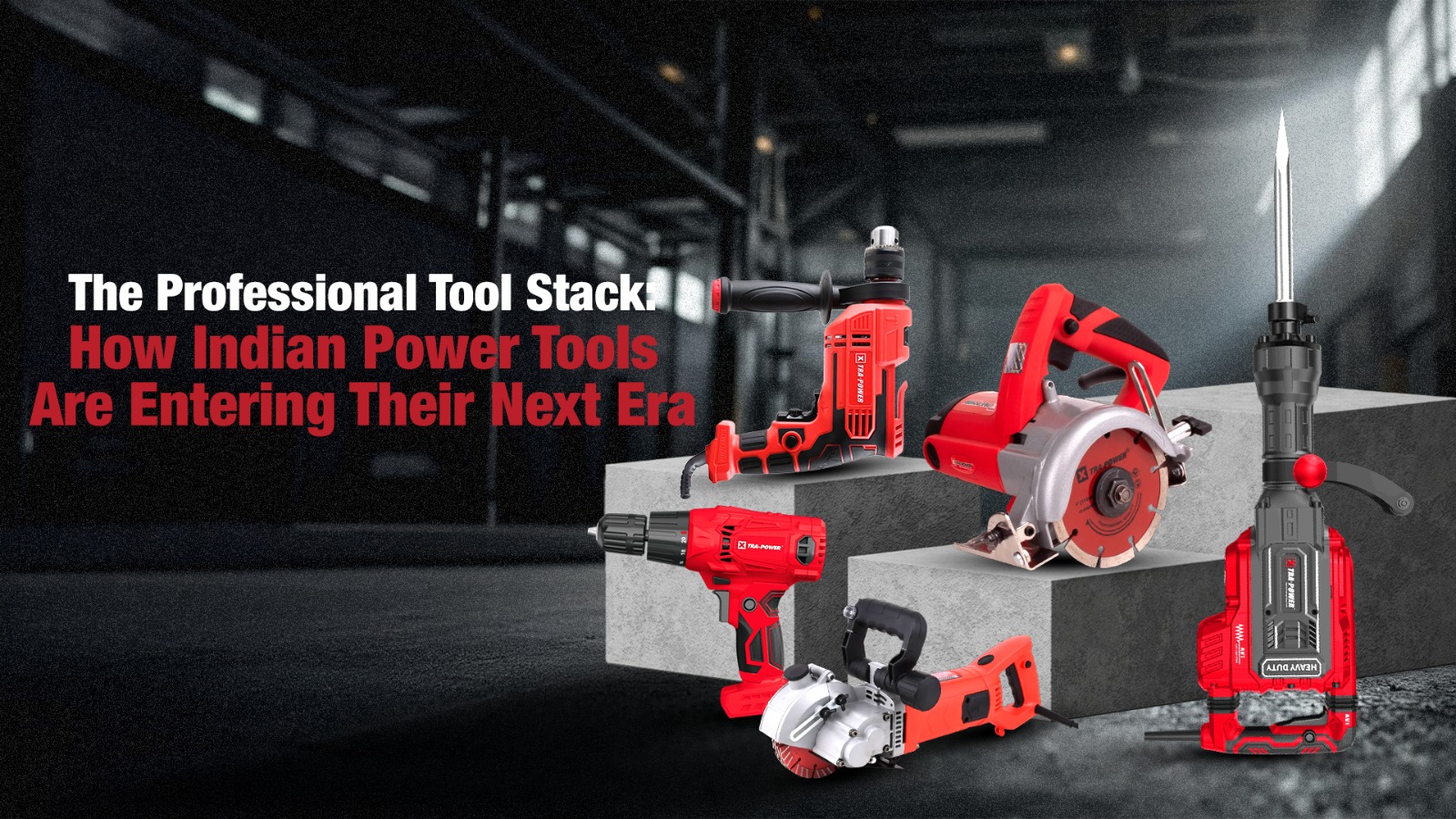
In this evolving landscape, Xtra Power Tools aligns its approach with the demands of the system era by focusing on building complete working ecosystems that go beyond individual product performance, integrating strong service networks, compatible battery and accessory platforms, data-enabled maintenance support, and training initiatives that help professionals maximize efficiency and reduce operational disruptions, ensuring that tools continue to perform reliably in real-world conditions over extended periods of use while supporting long-term productivity.
The Direction Ahead
As the industry moves further into 2026 and beyond, it is becoming increasingly clear that the tools that will succeed are not necessarily those with the highest specifications but those that offer consistent performance, quick service recovery, intelligent functionality, and seamless integration into the broader workflow, reinforcing the idea that while the spec-driven era played an important role in the growth of the industry, it is the system-driven approach that will ultimately define its future.